
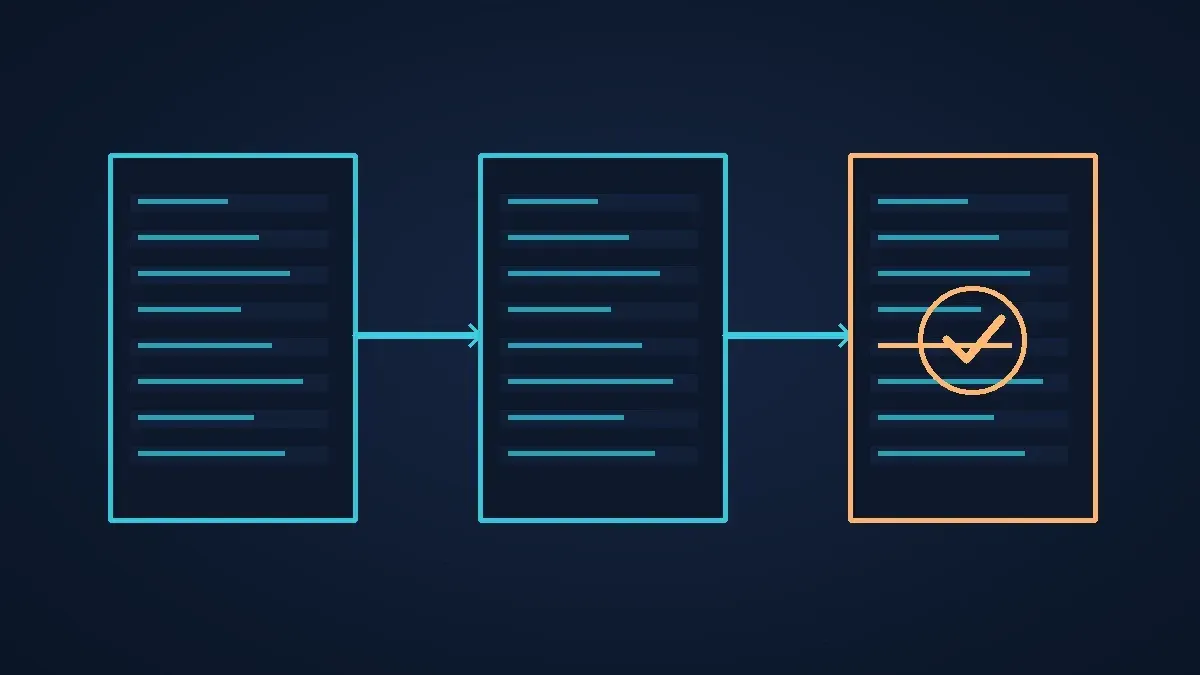
Researchers at UW Health and the University of Wisconsin School of Medicine and Public Health have made an automated evaluation tool for AI-written patient summaries available through Epic's open-source repository. The release, announced on November 25, 2026, gives health systems a way to examine the quality of machine-generated clinical documentation using a standardized scoring method.
The collaboration addresses an awkward consequence of using generative AI in healthcare: if a doctor must read the entire original record to verify every generated summary, much of the promised time saving can disappear.
How the AI judge works
The tool draws on the Provider Documentation Summarization Quality Instrument, or PDSQI-9. As the university explains, clinicians and researchers developed a nine-item evaluation framework and subsequently tested whether a separate language model could apply it consistently.
A 2025 study published in npj Digital Medicine found that the GPT-o3-mini configuration achieved an intraclass correlation coefficient of 0.818 against expert human evaluations. The researchers reported an average evaluation time of 22 seconds, compared with approximately 600 seconds for human reviewers. Those figures describe the study's evaluation task, not the time needed to establish the safety of an entire clinical system.
Healthcare Purchasing News reports that the instrument covers dimensions including accuracy, completeness and clinical usefulness. The university says both the evaluation software and scoring rules are publicly available, and that UW Health already uses the instrument in its own AI oversight.
Agreement is not a guarantee of safety
The distinction matters for healthcare organizations considering automated quality checks. A second model can help identify problematic summaries and prioritize material for human review. But agreement with clinicians on a scoring rubric does not demonstrate that every clinically significant mistake will be detected. Two AI systems can also share weaknesses, especially when they interpret ambiguous records.
Before adopting the evaluator, a health system would therefore need to establish how it performs on local records, different patient populations and rare but serious errors. The release makes that testing more accessible; it does not remove the need for it.
We explored a related question in our analysis of clinical AI and selective autonomy: the ability to recognize when a human needs to intervene may be just as important as the ability to produce a plausible answer.
Sources
- University of Wisconsin, November 25, 2026 — release announcement.
- npj Digital Medicine, 2025 — peer-reviewed evaluation study.
- Healthcare Purchasing News — trade coverage.


