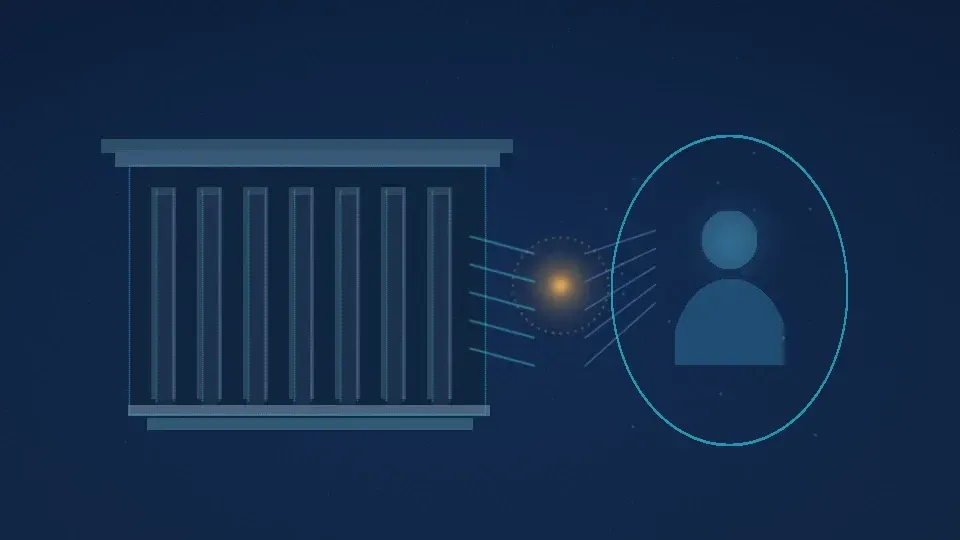
Denmark has introduced legislation that would give public authorities a clearer legal basis for using artificial intelligence to process personal information for tasks such as decision support. But the proposal does not open the door to unrestricted automated government decisions—and Denmark's data protection regulator is warning that a statutory permission alone would not make every AI project lawful.
The bill, designated L 99 in the Danish parliament, was introduced on November 11, 2026. On November 13, the Danish Data Protection Agency (Datatilsynet) published its response and emphasized that a legal basis is only one part of compliance when public bodies develop and operate AI systems using personal data.
What the proposal would do
Public agencies increasingly want to use AI for activities such as reviewing information, identifying cases that need attention and supporting officials as they make decisions. Under the proposal, authorities would gain a general data-protection legal basis for developing and using systems to process personal information within their public duties, including certain forms of profiling used for decision support.
The distinction between supporting an official and replacing that official matters. According to the regulator's account of the bill, it does not create a legal basis for fully automated individual decisions covered by Article 22 of the EU General Data Protection Regulation (GDPR). In other words, it should not be described as a blanket authorization for an AI system to determine an individual's benefits, eligibility or other legal position without the safeguards required by existing law.
The parliament's official bill record lists L 99 as introduced, not enacted. The proposed rules therefore cannot be treated as legislation already in force. Their exact scope and final wording remain subject to the parliamentary process.
Why the privacy regulator is cautious
In comments published after the bill's introduction, Datatilsynet reiterated that finding a legal basis does not resolve the entire privacy analysis. Agencies still need to examine security safeguards, individual data rights, transfers of personal information outside the relevant jurisdiction and the risk of using data for purposes different from those for which it was originally gathered.
This is more than a legal technicality. An AI system may rely on information collected for a public service, then infer sensitive patterns, make classifications or expose personal information through its technical architecture. An agency cannot skip those questions merely because legislation permits AI-assisted processing in principle.
The regulator had already raised concerns during earlier consultations, including a response in March and further comments in October. Its November statement signals that the proposed legal framework remains a subject for debate, rather than a regulatory seal of approval for any particular system or vendor.
A wider lesson for European public-sector AI
Denmark's proposal illustrates a practical challenge for public bodies subject to GDPR: policymakers may clarify the legal basis for AI projects without eliminating the remaining data-protection obligations on each deployment. A general legislative basis may help clarify who can process data and for what public purpose; it cannot demonstrate that a model is accurate, fair, secure or appropriate for a particular decision workflow.
For technology suppliers, the distinction means procurement should cover more than model performance. Public buyers need to understand what information the tool processes, whether humans can meaningfully contest or override recommendations, how information is stored, and whether audits can reconstruct how a recommendation was reached. Those are implementation questions, not claims that the proposed Danish statute itself imposes every one of those controls.
The next milestones are parliamentary consideration of L 99, any amendments following the privacy authority's comments and clearer guidance for specific public-sector deployments. Until lawmakers act, the immediate news is a proposal for legal clarity accompanied by an equally clear warning: authorization to use AI is not the same as proof of lawful use.
Sources: Danish Parliament, Bill L 99, introduced November 11, 2026; Minister's introduction statement; Datatilsynet, comments published November 13, 2026; Datatilsynet, September consultation background.